Marie-Laure finds the iron key in the model house
All the Light We Cannot SeeMarie-Laure LeBlanc finds an iron key hidden beneath the roof of the model house, turning a long-running uncertainty into a tangible discovery without resolving the fate of the Sea of Flames. The scene moves between memory and careful physical investigation: she imagines what the boy who returned for the house might have done, then works its small mechanisms until something drops into her hand.
Memory and the Unanswered Question
At her lab table, Marie-Laure touches the Dosinia shells in their tray, and memories arrive in brief, tactile flashes: clinging to her father’s trouser leg, sand fleas around her knees, and Captain Nemo’s submarine vibrating with its mournful song. The model house remains present in the scene, but it does not yield its secret simply because she remembers it. She shakes it, knowing it will not give itself away.
Her thoughts circle around the boy who went back for the house, carried it out, and died with it. She remembers him paging through a book belonging to Etienne LeBlanc and dwelling on its birds. These recollections sharpen the question of what the boy did with the stone, but do not answer it. Marie-Laure imagines several possibilities: he might have dropped the diamond into the pool among thousands of snails, returned it to the house, or slipped it into his pocket. Each remains a possibility rather than a recovered fact.
The House Reconstructed in Memory
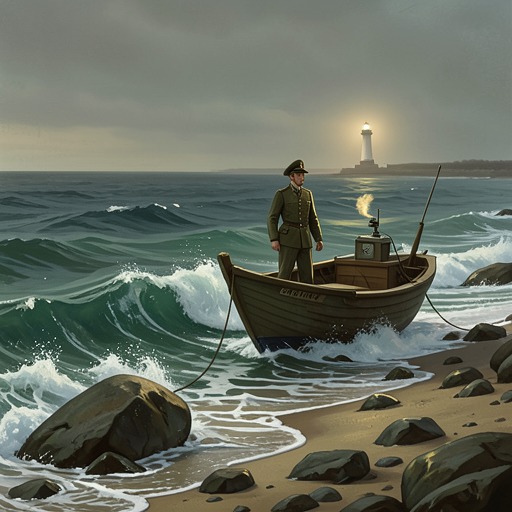
Marie-Laure sees herself leaving the smoking city with a white pillowcase trailing behind her. Once she is out of sight, the boy turns back through Harold Bazin’s gate. In her recollection, the rampart rises above him as a crumbling bulwark, with the sea beyond the grate. She imagines him solving the little house’s puzzle there, but even this sharply pictured sequence does not settle what he chose to do with the diamond.
A remembered thought from Dr. Geffard gives the uncertainty a human measure: something small can be beautiful and immensely valuable, and turning away from the feelings it awakens requires strength. The thought resonates with Marie-Laure’s several possible endings for the stone, but the scene does not identify one as true. The model house holds a question that memory can revisit without conclusively answering.
The Key in Her Palm
The answer the house does provide comes through its construction. Marie-Laure twists the chimney ninety degrees; it turns smoothly, as if her father had only just built it. The first of the three wooden roof panels will not slide off, so she uses the end of a pen to lever the panels away one by one. Something drops into her palm: an iron key.
The discovery establishes that a key was concealed beneath the roof panels, but the scene does not say what it opens. Nor does it settle whether the boy put the Sea of Flames into the house, discarded it among the snails, or kept it. The difference matters: the key is newly certain, while the stone’s destination remains conjectural. The model house has yielded an object, not a complete account of its past.
Significance
The scene’s movement from recollection to touch gives the discovery its force. Marie-Laure cannot make memory disclose which imagined fate is correct; she can, however, turn the chimney, pry at the stuck panels, and find what their arrangement has hidden. The iron key converts the model house from a container of speculation into a source of physical evidence, while leaving the larger mystery intact.